
Fatigue Testing vs. Composite Fatigue Testing: Key Differences You Should Know
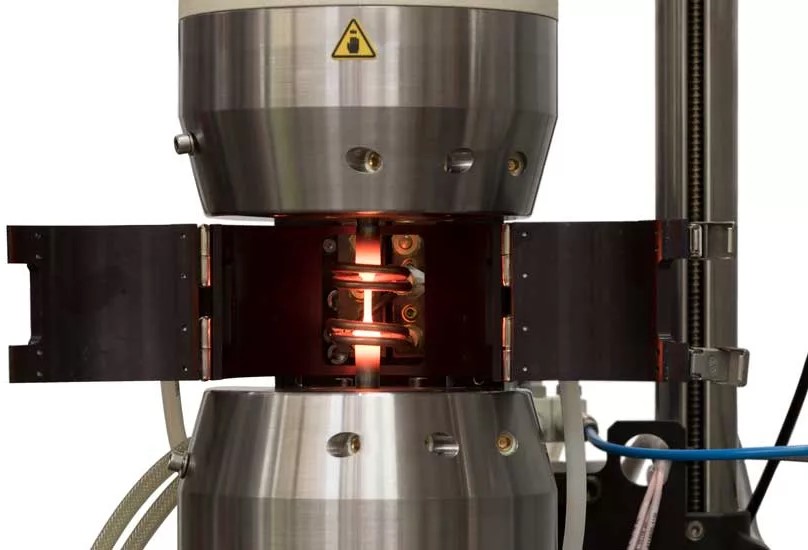
In the world of engineering and material science, fatigue testing plays a critical role in ensuring the reliability and durability of products. From airplane wings to automotive suspension systems, fatigue testing helps predict how materials will perform under repeated loading.
However, as industries increasingly adopt composite materials for their lightweight and high-strength properties, composite fatigue testing has emerged as a specialized field. While both share the same core purpose — evaluating a material’s endurance under cyclic stress — their testing methods, failure mechanisms, and analysis approaches differ significantly.
This article explores the key differences between fatigue testing and composite fatigue testing, highlighting their importance in industries like aerospace, automotive, and renewable energy.
What Is Fatigue Testing?
Fatigue testing is a method of determining how a material behaves when subjected to repeated cycles of stress or strain over time. Even if the applied loads are below the material’s ultimate tensile strength, they can cause progressive damage, leading to cracks and eventual failure.
Key Objectives of Fatigue Testing
- Determine the fatigue life (number of cycles before failure).
- Identify the endurance limit (stress level below which a material can withstand infinite cycles).
- Understand failure modes under cyclic loading.
- Provide data for design safety margins.
Common Applications
- Aircraft wings and fuselage components.
- Automotive axles, suspension, and engine parts.
- Industrial machinery shafts.
- Bridges and civil structures.
What Is Composite Fatigue Testing?
Composite fatigue testing focuses on evaluating composite materials, which are made of two or more constituent materials with distinct physical or chemical properties.
Typical composites include carbon fiber-reinforced polymers (CFRP), glass fiber composites, and Kevlar-reinforced plastics.
Unlike metals, composites don’t have a uniform structure — their fibers and matrix layers interact differently under stress, leading to unique fatigue damage mechanisms such as:
- Matrix cracking
- Fiber breakage
- Delamination between layers
Why It Matters
Composites are widely used in:
- Aerospace: Aircraft fuselage panels, rotor blades.
- Automotive: Lightweight body panels, structural reinforcements.
- Wind Energy: Turbine blades.
- Sports Equipment: Bicycles, tennis rackets, racing boats.
Their lightweight yet high-strength characteristics make them ideal for performance-critical applications, but they require specialized fatigue testing techniques.
Key Differences Between Fatigue Testing and Composite Fatigue Testing
| Aspect | Fatigue Testing (Metals) | Composite Fatigue Testing |
| Material Type | Metals, alloys, steel, aluminum | Fiber-reinforced polymers, carbon composites, glass fiber composites |
| Failure Mechanism | Crack initiation → crack growth → fracture | Multiple damage modes: matrix cracking, fiber breakage, delamination |
| Stress-Strain Behavior | Uniform and predictable | Anisotropic (properties vary by direction) |
| Test Standards | ASTM E466, ISO 1099 | ASTM D3479, ISO 13003 |
| Life Prediction | S–N curves for metals | Requires multi-parameter analysis (fiber, matrix, environmental effects) |
| Data Interpretation | More straightforward | Complex due to multiple interacting failure modes |
| Repair & Maintenance Impact | Easier to detect and repair cracks | Damage may be internal and harder to detect without advanced NDT methods |
Testing Methods for Fatigue in Metals
For metals and alloys, fatigue testing generally follows cyclic loading protocols such as:
- Rotating Bending Test
- Axial Loading Test
- Torsional Fatigue Test
Data is often presented in an S–N curve (stress vs. number of cycles), which helps engineers determine safe stress levels for infinite life.
Testing Methods for Composite Fatigue
Composite fatigue testing is more complex due to material anisotropy and layered construction. Common methods include:
- Tension–Tension Testing (repeated tensile loads)
- Compression–Compression Testing (compressive cycles)
- Tension–Compression Testing (alternating tensile and compressive loads)
- Flexural Fatigue Testing (bending cycles)
In composites, environmental factors like humidity, temperature, and UV exposure are often tested simultaneously, as they can significantly influence fatigue life.
Challenges in Composite Fatigue Testing
Composite fatigue testing is not just a scaled version of metal fatigue testing. The main challenges include:
- Multiple Damage Modes – Damage can start in the resin matrix, spread to fibers, and eventually cause delamination.
- Difficult Damage Detection – Internal cracks may not be visible until failure.
- Environmental Sensitivity – Composites are more sensitive to moisture absorption and temperature changes.
- Non-Linear Behavior – Fatigue life predictions require complex models rather than simple S–N curves.
Industry-Specific Importance
Aerospace Industry
- Fatigue Testing: Ensures aluminum or titanium parts (landing gear, engine mounts) can withstand thousands of flight cycles.
- Composite Fatigue Testing: Validates carbon fiber fuselage sections and wing panels for long-term performance.
Automotive Industry
- Fatigue Testing: Evaluates metal chassis components, suspension arms, and axles for repeated road stresses.
- Composite Fatigue Testing: Checks lightweight composite body panels and structural inserts for durability under vibration and load.
Wind Energy
- Composite Fatigue Testing is critical for rotor blades that face millions of stress cycles over their lifetime.
Standards and Guidelines
For Metals:
- ASTM E466 – Axial fatigue testing.
- ISO 1099 – Rotating bending fatigue test.
For Composites:
- ASTM D3479 – Tension–tension fatigue of polymer matrix composites.
- ISO 13003 – Fatigue testing of fiber-reinforced plastics.
Following these standards ensures reliable, repeatable, and comparable results.
How Test Results Influence Design
Both testing types directly impact:
- Material selection
- Design safety factors
- Maintenance schedules
- Warranty and service life predictions
For composites, test data often leads to layer reconfiguration or fiber orientation adjustments to improve fatigue life. For metals, results may prompt heat treatment or surface hardening to resist crack initiation.
The Future of Fatigue Testing
Advancements in non-destructive testing (NDT) methods, such as ultrasound, thermography, and X-ray CT scanning, are making it easier to detect early fatigue damage, especially in composites.
Moreover, AI-driven predictive models are helping engineers estimate fatigue life without exhaustive physical testing.
Conclusion
While fatigue testing and composite fatigue testing share the goal of evaluating material performance under cyclic loads, they are fundamentally different in execution and interpretation.
- Fatigue testing of metals is more predictable and well-understood.
- Composite fatigue testing is complex due to multiple failure modes, anisotropy, and environmental sensitivity.
For industries relying on advanced materials — from aerospace to wind energy — understanding these differences ensures safer, more efficient, and longer-lasting products.


